
Coconut Shell Charcoal vs. Wood Charcoal: Understanding the Difference
- 18 Sep 2026
- Education
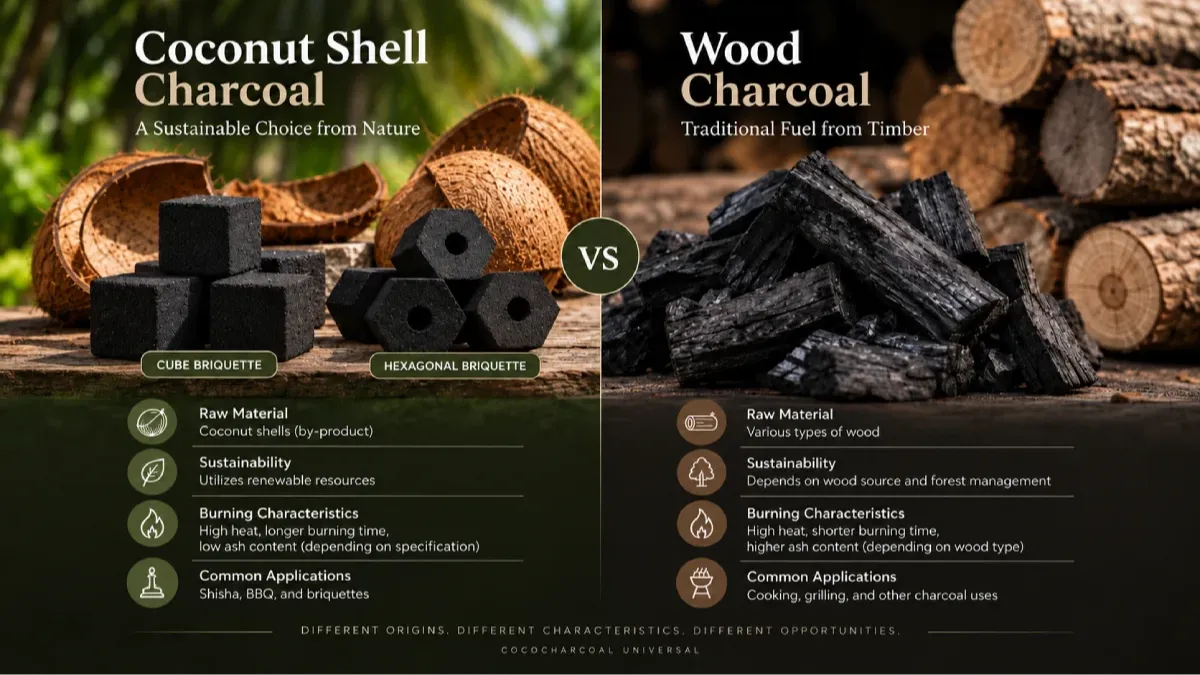
Photo by CocoCharcoal Universal
Author: CocoCharcoal Universal
Reading Time: 2 min read
Coconut shell charcoal and wood charcoal are both widely used charcoal products, but they come from different raw materials and offer different characteristics. Understanding these differences can help buyers select the right charcoal for their intended application.
Coconut shell charcoal is produced from coconut shells, a by-product of the coconut industry. The shells are carbonized and can then be processed into charcoal or further converted into briquettes. Wood charcoal, on the other hand, is produced from various types of wood through a carbonization process.
One important difference is the raw material itself. Coconut shells provide a renewable source of biomass that can be recovered from coconut processing. Using the shells for charcoal production also gives value to a material that would otherwise have limited use.
In terms of applications, coconut shell charcoal is commonly used for briquette production, particularly for Shisha and BBQ charcoal. Wood charcoal is also used for cooking and grilling, with its characteristics depending on the type of wood and production process.
Product performance can vary depending on production methods and specifications. Factors such as moisture, ash content, fixed carbon, density, size, and burning characteristics should therefore be considered when comparing charcoal products.
At CocoCharcoal Universal, we supply coconut shell charcoal and coconut charcoal briquettes from Indonesia for different applications and customer requirements.
Looking for the right charcoal for your application? Contact us to discuss your product requirements.
Other Article
 Global Trading
 Tips & Tricks
 Global Trading
Why Importers Choose Indonesian Coconut Charcoal
- 18 Sep 2026
 Education
 Tips & Tricks