
Sourcing Indonesian Coconut Charcoal for Manufacturers
- 05 Oct 2026
- Education
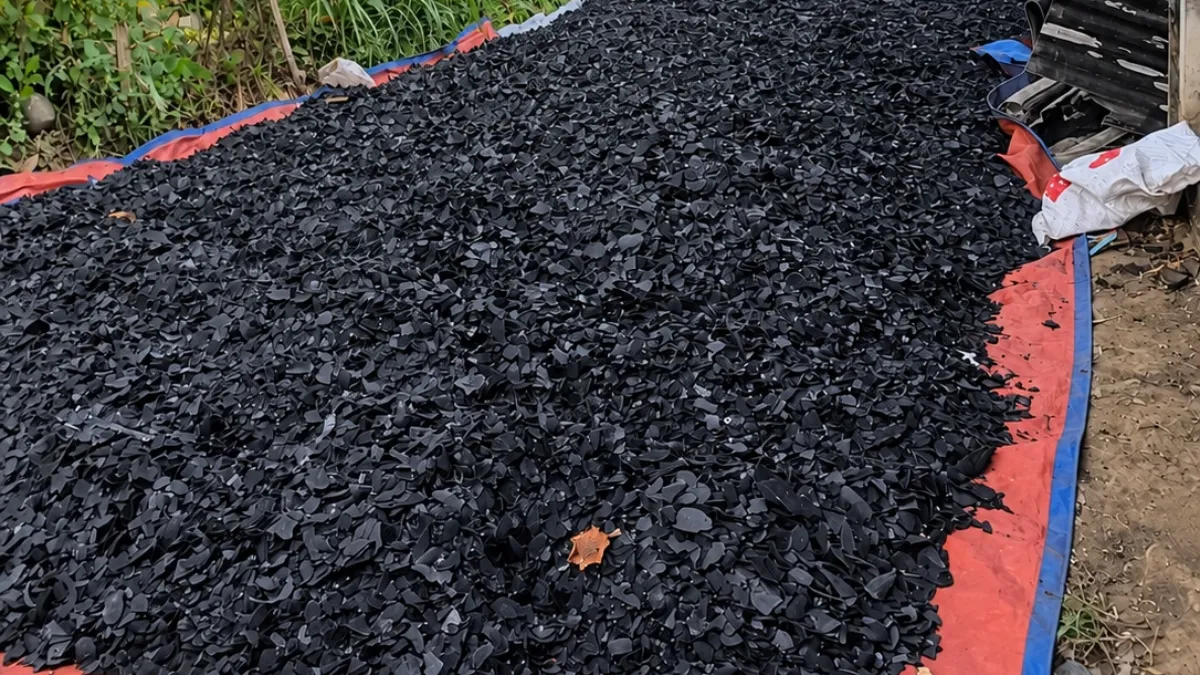
For manufacturers of briquettes using coconut shell charcoal, the key factors in sourcing are threefold: the quality of the raw material in relation to your product specifications, the reliability of supply to meet your production needs, and finding a supplier who is adept at dealing with industrial clients rather than retail distributors.
Indonesia stands out as the leading supplier of bulk coconut shell charcoal in the global market. Its advantages include abundant raw material, a well-established carbonization infrastructure, and the ability to export at scale, making it the go-to option for many manufacturers looking to source this material internationally. However, as with any industrial raw material, there can be significant differences between suppliers, and choosing the wrong one can negatively impact your production output, not just the quality of the material.
This guide is intended for production and procurement teams at briquette manufacturing facilities assessing Indonesian coconut shell charcoal as a potential raw material source, whether for the first time or during a supplier evaluation.
Why Briquette Manufacturers Source Coconut Shell Charcoal from Indonesia
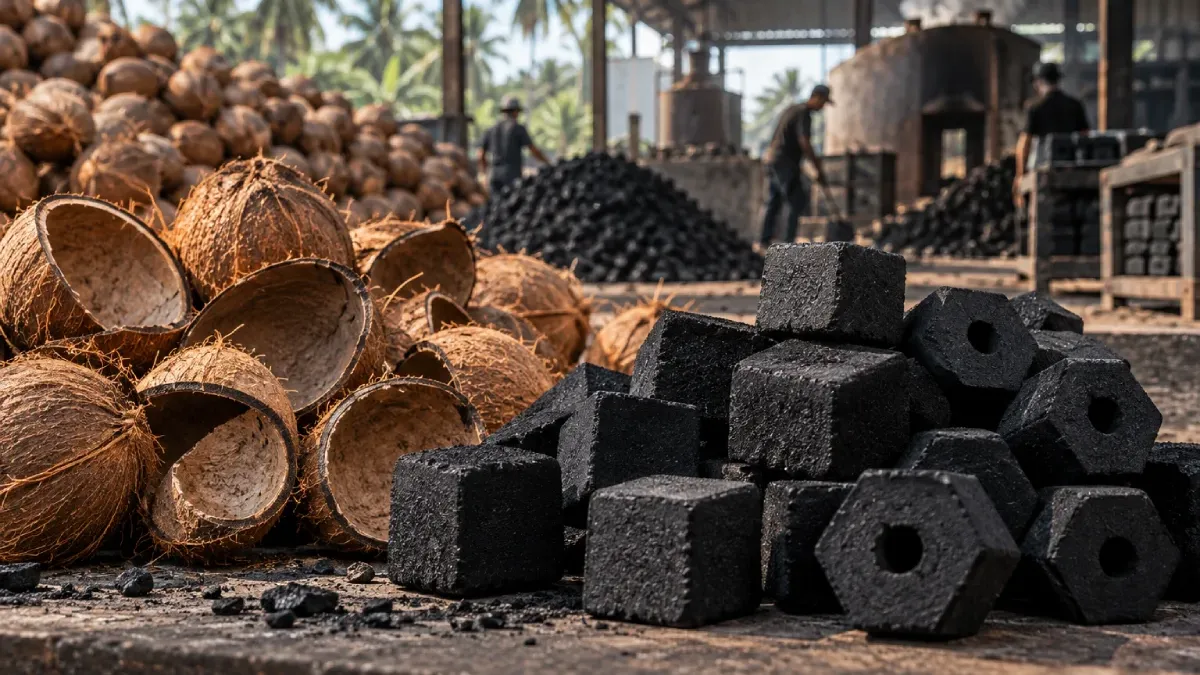
Coconut shell charcoal plays a crucial role in the supply chain for briquette raw materials. Its unique physical and chemical properties make it a top choice for producing high-quality briquettes, especially for shisha and hookah charcoal, as well as for premium BBQ briquettes.
From a manufacturing standpoint, the key properties include:
High and consistent carbon content. Compared to wood-based materials, coconut shell naturally has a higher carbon content, resulting in briquettes with elevated fixed carbon levels, which is essential for both shisha and BBQ uses.
Low ash yield. During carbonization, coconut shell generates less ash than most wood types, which is reflected in the lower ash content of the final briquettes. This is a significant reason why manufacturers prefer coconut shell over wood for premium shisha charcoal.
Dense, hard raw material. The physical density of coconut shell allows for effective compression during briquette formation, enhancing the structural integrity and consistent burn characteristics of the final product.
Neutral odor profile. Coconut shell charcoal emits very little odor when burned, which is vital for shisha applications, as it should not alter the flavor of the smoke.
Indonesia stands out as the leading global supplier of this material due to its extensive coconut cultivation, established carbonization facilities, and rich export experience. Sourcing in bulk from Indonesia is a well-trodden supply chain path, ensuring that there are suppliers with genuine industrial export capabilities, alongside others who may claim such capabilities without the necessary operational support.
Available Grades: Fixed Carbon, Ash Content, and Moisture Specifications
Coconut shell charcoal isn't just one uniform product; it varies in grades based on factors like carbonization conditions, the quality of the coconut shells used, and the production methods applied. To have a fruitful discussion with an Indonesian supplier, it's essential to understand the grade parameters that are relevant to your needs.
Fixed Carbon
The fixed carbon content is the key quality indicator for coconut shell charcoal. It indicates how much usable carbon will be present in your finished briquette, which directly influences the fixed carbon specification of the final product.
For briquette production, export-grade coconut shell charcoal typically has a fixed carbon content of around 70% or higher. The specific fixed carbon level you need will depend on your product specifications and binder formulation; generally, a higher fixed carbon content in the raw material provides more flexibility in the briquette formulation process.
CocoCharcoal Universal offers coconut shell charcoal with a fixed carbon specification of approximately 70% or more.
Ash Content
The ash content of the raw material directly impacts the ash content of the finished briquette. If your product specifications require the ash content to be below a certain level, then the ash content of your raw material must consistently be lower than that threshold to account for any ash that may come from binders or the pressing process.
CocoCharcoal Universal's coconut shell charcoal is specified to have an ash content of up to 3%.
Moisture Content
The moisture content in raw materials plays a crucial role in various aspects of your production process. It influences how the materials are stored before production, the energy needed to dry them to the appropriate moisture levels, and the moisture that ends up in your finished briquette before the final drying stage.
For raw coconut shell charcoal, a moisture content of up to 12% is considered acceptable for standard export-grade material. This level is higher than the moisture specifications for finished briquettes because the raw material goes through additional processing steps, such as mixing, pressing, and drying, before it becomes the final product.
CocoCharcoal Universal specifies that its coconut shell charcoal can have a moisture content of up to 12%.
Volatile Matter
The volatile matter in raw materials is released during the carbonization process that creates the raw charcoal. Ideally, well-carbonized coconut shell charcoal should have low volatile matter. If the raw material has high volatile matter, it suggests that the carbonization process was incomplete, which can negatively impact the burn behavior of the finished briquette.
It's important to ask suppliers to include the volatile matter in their certificate of analysis. If it's not provided, make sure to request it specifically, as it serves as a significant quality indicator that distinguishes properly carbonized material from that which has not been fully processed.
Packaging and Loading: How Raw Material Is Shipped in Bulk
Coconut shell charcoal in its raw form is usually transported in a different way than the finished briquettes. Knowing how the bulk raw material is packaged and loaded can assist you in organizing your receiving and storage processes at the destination.
Packaging Options
Raw coconut shell charcoal is typically shipped in large woven polypropylene (PP) bags, commonly known as jumbo bags or bulk bags, as well as in smaller woven bags depending on the order size and the configurations offered by the supplier. Jumbo bags usually contain between 500 kg and 1,000 kg of charcoal and are made for mechanical handling, such as with a forklift or crane, at the receiving location.
For manufacturers equipped to manage jumbo bags, this packaging method is the most efficient for handling bulk volumes. Conversely, for facilities that require smaller quantities for each delivery, smaller bag options might be more suitable.
It's important to confirm with your supplier:
- The available packaging formats and specifications for the bags
- The weight per bag and any tolerances
- Whether the bags are intended for single use or can be reused
- The methods used for sealing and labeling the bags for shipping
Container Loading
When loading raw materials in bulk bags, they are usually placed directly on the floor of containers, arranged in a way that optimizes the use of space. The way bags are loaded, including the number of bags per container, the stacking method, and how they are secured, plays a crucial role in both the efficiency of shipping and the condition of the materials upon arrival.
It's important to check with your supplier about their loading practices and whether they implement any moisture protection inside the container. Since coconut shell charcoal tends to absorb moisture, poor management during a lengthy ocean transport can lead to the material arriving with moisture levels that exceed the specified limits.
Lot Sizing and Container Quantities
When sourcing bulk raw materials, the standard unit is typically a container load, which can be either a 20-foot container (20ft) or a 40-foot container (40ft). The amount of material that can be loaded depends on the bulk density of the material and how it is packaged.
It's important to have a conversation with your supplier and freight forwarder to understand how much of your specific packaging format can fit into each type of container. This will help you determine your minimum order quantity for each shipment and calculate the shipping cost per ton.
Consistency and Quality Control: What to Verify Before Ordering
For a manufacturing buyer, ensuring consistency in raw materials is just as crucial as their quality within a single batch. If a supplier delivers top-notch material in one shipment but fails to maintain that quality in the next, it can lead to costly production planning issues.
When assessing a supplier of Indonesian coconut shell charcoal, consider the following:
Batch testing protocol. Inquire about how the supplier tests each production batch prior to shipment. Is there a specific standard that every batch must adhere to, or is testing conducted on a sample basis? Request documentation that outlines how quality control is maintained across all batches, not just for the sample you receive.
Certificate of analysis per shipment. A reliable supplier should provide a Certificate of Analysis (COA) for each container shipment, rather than relying on a historical document that claims to represent all production. This practice is standard in the industrial raw material supply chain and should be a firm requirement.
Source material consistency. The quality of coconut shell charcoal is influenced by the quality and uniformity of the raw coconut shells used during carbonization. Suppliers who obtain coconut shells from consistent, controlled sources are likely to produce more uniform charcoal compared to those using variable or mixed-origin materials. It's advisable to ask about this directly.
Third-party inspection. Some Indonesian suppliers collaborate with recognized inspection agencies to confirm product quality before shipment. Engaging a third-party for pre-shipment inspection provides an additional layer of independent verification beyond the supplier's own quality control documentation. Inquire if this service is available and what it entails.
How to Send Your Raw Material Requirements to an Indonesian Supplier
Industrial buyers who clearly communicate their needs tend to receive more relevant responses and accurate quotes compared to those who send vague inquiries. Here’s a practical guide for your initial contact with a coconut shell charcoal supplier in Indonesia:
Begin by stating the application. Let the supplier know what you are producing, whether it’s shisha charcoal briquettes, BBQ briquettes, activated carbon feedstock, or something else. This clarity helps them determine which grade of material suits your needs and minimizes unnecessary back-and-forth about irrelevant applications.
Next, specify your raw material requirements. Clearly outline your desired fixed carbon range, maximum ash content, maximum moisture content, and any other specifications necessary for your production. If you have a current raw material specification sheet, it’s helpful to share that as well.
Then, mention your production volume and sourcing frequency. By informing the supplier of your monthly or quarterly raw material needs, they can better assess their ability to supply you consistently and provide more accurate information regarding lead times and availability.
Don’t forget to ask for the Certificate of Analysis (COA) along with your specifications. It’s important to request this documentation early on, rather than waiting until after the sample stage. Having the COA for recent production as part of your initial inquiry will indicate whether the supplier adheres to the documentation standards necessary for industrial supply relationships.
Lastly, specify your packaging requirements. Indicate whether you need jumbo bags, smaller bags, or another format, and confirm the weight per unit that you require.
Also, mention your destination port. This information allows the supplier to provide FOB pricing and, if applicable, assist with freight estimates to your facility.
Getting Started: Samples and Initial Order Discussion
When engaging with an Indonesian coconut shell charcoal supplier for the first time, you can expect the following standard process:
- Initial Specification Exchange: Start by sharing your requirements and reviewing the supplier's product specifications and Certificate of Analysis (COA).
- Sample Request: Ask for a sample lot to conduct laboratory testing at your facility. Ensure that the sample comes with a COA specific to that batch.
- Internal Quality Assessment: Evaluate the material against your production specifications. This may involve running a small production trial to see how the material performs on your briquette line.
- Commercial Discussion: Once the material meets your standards, discuss details such as order quantity, packaging, pricing, payment terms, and delivery schedule.
- First Order: Typically, you would place a single container order to establish the commercial relationship before moving to a recurring supply arrangement.
This process is standard for industrial raw material supply relationships and should be familiar to any Indonesian supplier with real manufacturing experience.
At CocoCharcoal Universal, we provide coconut shell charcoal as a raw material for briquette production. Our specifications include:
- Fixed carbon: Approximately 70%+
- Ash content: Up to 3%
- Moisture content: Up to 12%
- Primary application: Briquette production (shisha, BBQ, and related applications)
We assist manufacturing buyers throughout the inquiry process, from exchanging specifications and coordinating samples to handling export documentation.
Feel free to view our complete raw material specifications and reach out to our team for more information.
Conclusion
Sourcing coconut shell charcoal from Indonesia has become a reliable supply chain for briquette manufacturers both in Asia and around the world. The key to successful sourcing, as with any industrial raw material, lies in clearly defining your specifications. It's essential to ensure that your supplier can provide documentation to back up their claims, rather than just verbal descriptions. Before committing to large orders, it's wise to test the material in your production process and evaluate the supplier's consistency and communication separately from the quality of a single sample.
Indonesia has suppliers capable of meeting the needs of serious industrial buyers. To find them, you need to ask the right questions that help differentiate those who adhere to defined standards from those who merely claim to do so.
Are you ready to discuss your coconut shell charcoal needs for briquette production? Please share your specifications, including fixed carbon, ash content, moisture levels, and target volume, and our team will get back to you with our product documentation and sample process.
Other Article
 Tips & Tricks
 Global Trading
 Education
 Global Trading
 Global Trading