
Indonesian Coconut Charcoal Specs for Industrial Buyers
- 05 Oct 2026
- Global Trading
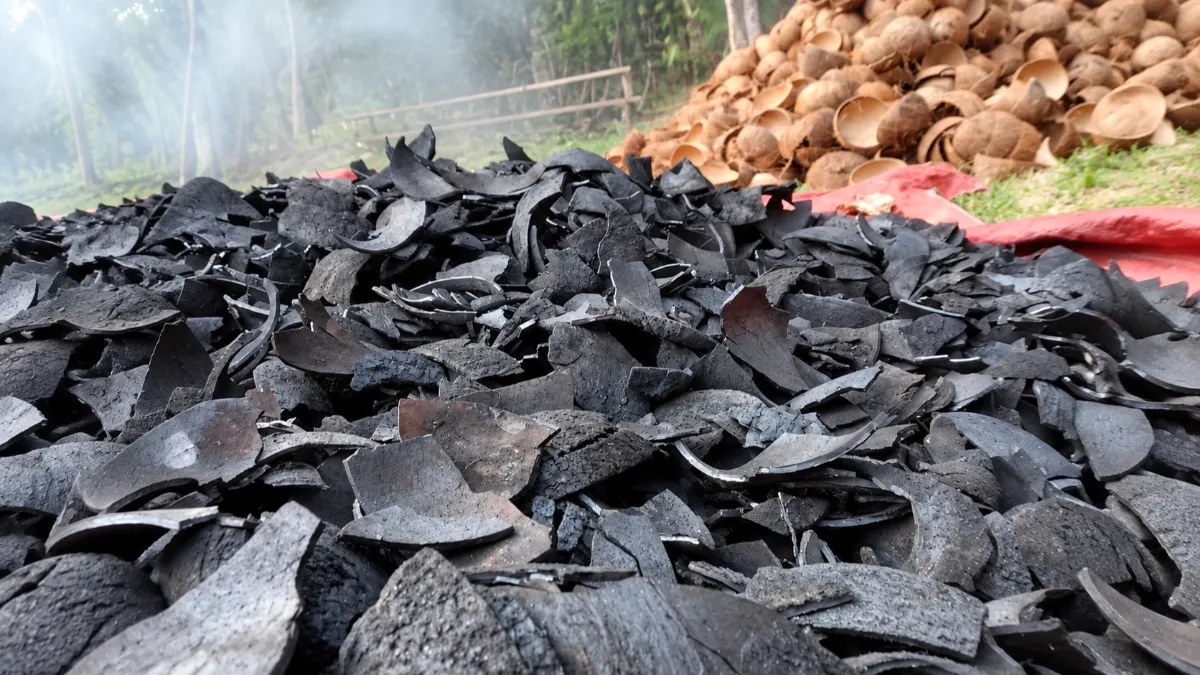
Every briquette production manager who has faced inconsistent raw materials understands the challenges involved. The yield from carbonization decreases, the behavior during pressing varies, and the final briquette emerges from the dryer with unexpected moisture levels. Often, the underlying issue can be traced back to a change in the raw material, such as a batch of coconut shell charcoal that wasn't carbonized to the same extent as the previous one or that arrived with moisture content outside the acceptable range.
Controlling the quality of raw materials for coconut shell charcoal isn't overly complex, but it does require a grasp of which parameters are important, what they indicate about the material, and how they relate to your production results. This guide is intended for QC managers, production engineers, and procurement teams at briquette manufacturing plants who are assessing Indonesian coconut shell charcoal as a potential raw material source. It aims to clarify what to measure, the significance of the numbers, and what to expect from suppliers.
Why the Raw Material Specification Drives Your Finished Product Quality
In the process of making briquettes, the quality of the final product heavily relies on the quality of the raw materials used. You might be able to fine-tune your binder mix, adjust the pressing pressure, and optimize the drying time, but if the fixed carbon content of your raw materials is consistently 5–8 percentage points lower than what your production standards demand, the final product will inevitably show that deficiency, no matter how well the other aspects of the process are controlled.
This distinction is why industrial buyers assess coconut shell charcoal differently than retail distributors evaluate a finished briquette. A distributor is focused on whether the product meets the needs of their customers, while a production engineer is concerned with whether the raw material will perform reliably throughout the manufacturing process and yield a final product that aligns with the required specifications.
These are distinct inquiries that necessitate different types of information from suppliers.
The key factors linking the quality of raw materials to the quality of the finished briquettes include fixed carbon content, ash content, moisture content, and volatile matter. Grasping each of these not merely as abstract numbers but as critical variables in your production process is essential for effectively evaluating suppliers.
Fixed Carbon: The Core Quality Indicator
Fixed carbon refers to the portion of charcoal that remains after moisture and volatile compounds have been removed. This is the carbon that actually burns in the final briquette. In terms of proximate analysis, it is determined by subtracting moisture, volatile matter, and ash from 100%.
For a briquette manufacturer, the fixed carbon content in raw materials is the most crucial quality indicator, as it has a direct and largely linear correlation with the fixed carbon in the finished product. If your production specifications require a finished briquette with fixed carbon above 79%, which is typical for premium shisha charcoal, your raw materials must consistently exceed a threshold that enables your process to meet that requirement, taking into account any losses during mixing, pressing, and drying.
The impact of inconsistent fixed carbon on your production:
When the fixed carbon content in raw materials fluctuates between batches, the fixed carbon in your finished product will also vary unless you adjust your formulation to compensate, which adds complexity. A batch with 68% fixed carbon will behave differently in your press compared to one with 74%, and this will be evident in the burn performance and heat output of the finished briquette.
What to ask from a supplier:
Request the fixed carbon specification as a minimum guaranteed value, rather than an average or a range without a specified lower limit. For Indonesian coconut shell charcoal intended for premium briquette production, a fixed carbon content of around 70% or higher is the standard for export-grade material.
CocoCharcoal Universal specifies a fixed carbon content of approximately 70%+ for our coconut shell charcoal raw material.
Verification: Ask for a certificate of analysis from an independent testing laboratory that includes fixed carbon as a tested parameter for each production batch, rather than just a stated specification.
Ash Content: What It Tells You About the Raw Shell Quality
Ash refers to the inorganic residue left after complete combustion, representing the part of the material that doesn't burn and doesn't add to the energy content of the final product. In the case of coconut shell charcoal, the ash originates from the mineral content of the coconut shell itself.
For manufacturers of briquettes, the ash content of raw materials is important for two main reasons. Firstly, it directly affects the ash content of the finished briquette; the amount of ash in the raw material will equal the amount in the final product, with potential additional ash from binder materials. Secondly, maintaining a consistently low ash content in the raw materials allows for greater flexibility in formulation and minimizes variability in the performance of the finished product.
The impact of inconsistent ash content on production:
A high ash content in the raw material can indicate either a low-quality source of coconut shell (such as immature shells, contamination with husk material, or mixing with non-shell materials) or insufficient carbonization. Either of these issues can lead to increased and potentially inconsistent ash levels in the finished briquettes, creating a quality issue that is challenging to rectify once the raw material is in the production process.
What to ask from a supplier:
For export-grade coconut shell charcoal that is suitable for high-quality briquette production, the standard ash content should be up to 3%. It's important to specifically inquire whether the supplier's ash content specification accurately reflects the actual coconut shell content of the carbonized material or if it includes any fines or dust that may have been mixed in during packaging.
CocoCharcoal Universal maintains an ash content specification of up to 3% for our coconut shell charcoal raw material.
Verification: The ash content should be listed as a tested parameter in the Certificate of Analysis (COA). If any batch shows a significantly higher ash content than the stated specification, it indicates a quality control issue that should be addressed with the supplier before the next shipment.
Moisture Content: The Parameter That Affects Everything from Storage to Yield
Moisture content is a crucial factor in daily production management. It influences how raw materials are stored before production, how they flow through mixing and pressing equipment, the energy needed to meet the moisture specifications of the finished product, and the overall consistency of production yield.
For raw coconut shell charcoal, a moisture content of up to 12% is considered standard for export-grade material. This is notably higher than the moisture levels required for finished shisha or BBQ briquettes, which typically range from 5% to 8%, depending on the product. This difference is due to the additional drying that the raw material undergoes during and after the pressing process. Thus, the moisture content of the raw material serves as a factor in calculating drying energy rather than a direct limitation on the moisture of the finished product.
The impact of high or variable moisture on production:
When raw materials arrive with moisture levels significantly above the specified range, it can lead to various production issues. Increased storage time before production raises the risk of further moisture absorption, especially in humid warehouse conditions. Excess moisture during the mixing phase can disrupt binder activation and affect the consistency of the mix. Higher moisture levels entering the process also increase the energy load on dryers and can prolong cycle times, ultimately reducing throughput.
More critically, if moisture content fluctuates between batches without prior notice, the established drying parameters may yield finished products with inconsistent moisture levels. This inconsistency can lead to quality issues that may not be detected until testing or until the product reaches the customer.
What to ask from a supplier:
Clearly state your maximum acceptable moisture content at the point of entry into production, taking into account any potential moisture gain during ocean shipping and warehouse storage. Inquire about how the supplier manages moisture content during production and what packaging strategies are implemented to minimize moisture absorption during transit.
CocoCharcoal Universal indicates that the moisture content of our coconut shell charcoal raw material can be as high as 12%.
For verification purposes, the moisture content must be documented in the Certificate of Analysis (COA) and should be tested as near to the loading date as possible. Be sure to request that the test date is included in the COA documentation.
Volatile Matter: The Carbonization Quality Indicator
Volatile matter refers to the portion of charcoal that is released as gas during the initial heating process. It consists of compounds that weren't completely eliminated during the original carbonization of the coconut shell. In materials that have been well-carbonized, the volatile matter content is low, while in those that are incompletely carbonized, it tends to be higher.
For manufacturers of briquettes, the volatile matter present in the raw material is significant for two main reasons. Firstly, it influences the burning characteristics of the final briquette. A high level of volatile matter in the raw material can lead to increased smoke and odor when lighting the finished product, which is particularly important in shisha applications, as this can be a visible quality indicator for users.
Secondly, and more crucial for production engineers, the content of volatile matter serves as a sign of the carbonization conditions that were used to create the raw material. A consistently low level of volatile matter suggests that the supplier's carbonization process is well-managed and produces material with a uniform degree of carbonization. On the other hand, variable or high levels of volatile matter across different batches indicate inconsistencies in the supplier's carbonization process, which often reflects variability in other quality parameters as well.
When dealing with suppliers, it's important to request that volatile matter is included as a tested parameter in the Certificate of Analysis (COA). Some suppliers may not list it as a standard parameter, so if it's missing from their COA, be sure to ask for it specifically and check if they can easily provide this information. A supplier who has never been asked for volatile matter data and is unable to supply it may not have the quality documentation you require for a solid production relationship.
Reading the Certificate of Analysis: What a Production Buyer Should Check
For someone purchasing industrial raw materials, the Certificate of Analysis (COA) is more than just a document for compliance; it plays a crucial role in your production planning. Here’s how to interpret it from a production standpoint:
First, ensure that all four key parameters are included. A thorough proximate analysis for coconut shell charcoal should list moisture content, volatile matter, ash content, and fixed carbon. If any of these parameters are absent, make sure to request them. A COA that only provides two or three parameters is insufficient for evaluating industrial raw materials.
Next, examine the test method. The COA should specify the analytical method used. This information enables you to compare results from different suppliers consistently and ensures that the testing method is suitable for characterizing charcoal.
Also, verify the issuing laboratory. Testing should be performed by an independent lab rather than the supplier's internal quality control team. For industrial-scale raw material supply, third-party testing is the expected norm.
Additionally, check the batch reference. The COA should be linked to a specific production batch or shipment, rather than being a generic historical document. Having batch-specific COAs in your production records helps you connect raw material quality with production output, which is vital for conducting root cause analysis if any quality issues arise during production.
Finally, consider the test date. A COA from a recent batch is significant. A COA from a batch produced two years ago provides little insight into the current quality of production.
Lastly, compare results across multiple batches. If a supplier can provide COAs from several recent batches, review them collectively. Consistent results across these batches offer a stronger indication of quality than relying on a single outstanding result.
How CocoCharcoal Universal Raw Material Performs Against These Parameters
CocoCharcoal Universal supplies coconut shell charcoal as raw material for briquette production. Our product is produced from selected coconut shell and verified through our quality process with Carsurin, a recognized Indonesian inspection and testing body.
Our raw material specifications:
| Parameter | Specification |
| Fixed carbon | Approximately 70%+ |
| Ash content | Up to 3% |
| Moisture content | Up to 12% |
| Primary application | Briquette production (shisha, BBQ, and related) |
We assist industrial buyers throughout the entire inquiry process, which includes discussing specifications, providing Certificates of Analysis (COA), coordinating samples, and handling export documentation. If you have a specification sheet for raw materials based on your current production needs, please feel free to share it with our team. We would be happy to provide you with the relevant product information.
View our full raw material specifications and request documentation.
Requesting a Certificate of Analysis from Your Supplier
Once you've pinpointed a potential supplier for raw materials, the first significant step in verifying quality is to request a Certificate of Analysis (COA). Here’s a practical template for your request:
In your COA request, make sure to include:
- Required parameters: moisture content, volatile matter, ash content, and minimum fixed carbon.
- Batch or production date reference: ensure the COA can be traced back to a specific shipment.
- Testing body: verify that the COA is issued by an independent laboratory, not an internal document.
- Format: check if you need the COA in a specific format for your quality control records.
A supplier who promptly and thoroughly responds to this request is showcasing their capability for quality documentation, which aligns with the standards of industrial raw material supply. Conversely, if a supplier is slow to respond, provides incomplete information, or sends a generic document instead of a batch-specific COA, it reveals insights about their operational standards even before you place your first order.
Conclusion
When a production engineer or QC manager assesses Indonesian coconut shell charcoal as a raw material, the process is similar to evaluating any other industrial input. You need to clearly define your requirements, ensure the supplier can meet them with proper documentation, test the material in your production process before committing to larger quantities, and maintain oversight on consistency across batches once the supply relationship is established.
This guide covers four key parameters: fixed carbon, ash, moisture, and volatile matter, which form the basis of your evaluation. It's crucial to understand how each parameter impacts your production process, not just the numbers themselves, as this knowledge will enable you to engage in more meaningful discussions with potential suppliers.
High-quality Indonesian coconut shell charcoal from a reputable supplier is a reliable, high-carbon raw material that consistently performs well in briquette production. To find the right supplier, it's essential to ask the appropriate technical questions and know what satisfactory answers should look like.
Are your raw material specification requirements prepared? Share them with our team, and we will provide the necessary product documentation, including the Certificate of Analysis (COA), for your review.
Other Article
 Education
 Global Trading
 Education
 Tips & Tricks
 Global Trading