
Importing Bulk Shisha Charcoal from Indonesia: Complete Guide
- 03 Oct 2026
- Tips & Tricks

Ordering shisha charcoal in bulk from Indonesia isn't overly complicated, but there are several important details to grasp before diving in. Experienced buyers understand the key information to provide upfront, the right questions to ask regarding packaging and loading, and how to effectively manage their inventory with realistic timelines in mind.
If this is your first time placing a container order or if you're collaborating with a new Indonesian supplier, this guide will walk you through the essential aspects of bulk shisha charcoal orders. It covers how the product is packaged, the loading and protection of containers, the necessary documentation, and the information you should gather before reaching out to a supplier.
This guide specifically targets the GCC markets, including Saudi Arabia, Kuwait, Oman, and the UAE, where the shisha charcoal distribution industry is well-established and buyers are purchasing at significant volumes.
What "Bulk Order" Means in the Indonesian Shisha Charcoal Market
In the context of Indonesian shisha charcoal exports, a "bulk order" usually refers to quantities that fill a container, which can either be a full container load (FCL) or a less-than-container load (LCL) for smaller initial purchases.
Choosing an FCL means you get the whole container, making it more cost-effective per unit when you have enough volume. It also keeps your product separate from others, minimizing the chances of cross-contamination or damage during handling. Most established distributors in the GCC who regularly buy shisha charcoal prefer FCL arrangements.
On the other hand, an LCL arrangement combines your shipment with goods from other shippers in a shared container. This option is often used for initial orders when you want to evaluate a supplier's product and process without committing to a full container. While LCL tends to be pricier per unit than FCL and requires more handling during consolidation, it’s a sensible choice for buyers who aren’t ready to commit to a full container yet.
The point at which you should switch from LCL to FCL depends on your order size and the specific terms provided by your supplier and freight forwarder. It’s a good idea to discuss this with both parties before placing your order.
Packaging Configurations for Bulk Shisha Charcoal
Understanding the packaging of shisha charcoal is crucial because it influences your overall product cost, the way you present it in retail, and its durability during shipping across the ocean.
Inner Box (Consumer Unit)
Shisha charcoal is usually packed in inner boxes that act as the retail unit for consumers. The most common sizes are 0.5 kg and 1 kg, although other formats may be available depending on the target market and distribution needs of the buyer.
When distributing to retail channels like shisha shops, supermarkets, or online platforms, the inner box is the first thing your customers will see. Some distributors stick with the supplier's standard packaging, while others opt for custom branding. If you require custom packaging, it's important to communicate this with your supplier early on, as it can impact lead times and may come with minimum order quantities.
Master Carton
Inner boxes are grouped into master cartons, which are used for storage in warehouses and for loading into shipping containers. Typical configurations for master cartons are 10 kg and 20 kg, but these can vary by supplier and can often be tailored to the buyer's specifications.
The weight of the master carton plays a significant role in how containers are loaded and how the product is managed upon arrival. While heavier master cartons can be more efficient for loading, they may necessitate mechanical handling in warehouses. This is an important consideration, especially in GCC markets where manual handling is more prevalent.
Container Loading and Pallet Configuration
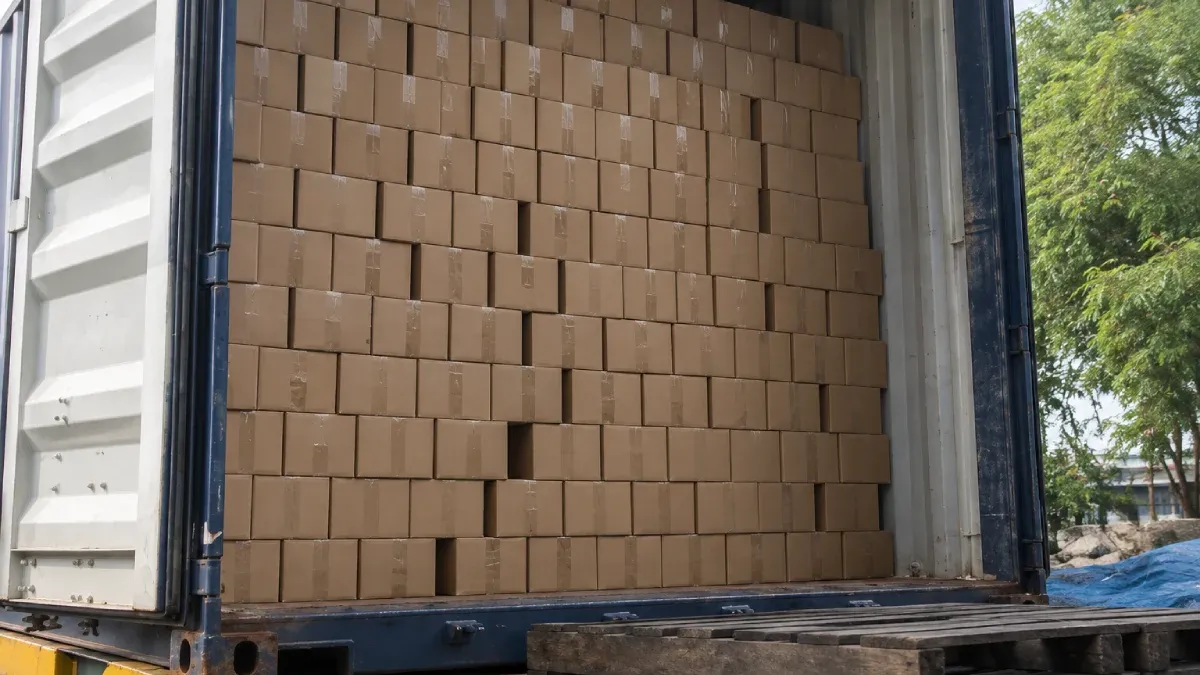
How master cartons are loaded into a container plays a crucial role in both protecting the products and ensuring efficient unloading at the destination. There are two main methods: products can be floor-loaded, meaning they are stacked directly on the container floor, or they can be palletized, which involves stacking them on pallets for easier handling with forklifts.
Palletized loading is typically favored by buyers who have warehouses equipped with forklifts, as it allows for quicker unloading and minimizes the chances of carton damage. On the other hand, floor loading is more efficient in terms of space and can lower the shipping cost per unit, but it does require more labor during the unloading process.
It's important to confirm your preferred loading method with the supplier before finalizing the order, as the configuration of the container loading will impact the packing list and must be arranged prior to loading the container.
Moisture Protection: Why It Matters for Ocean Shipments to the GCC
Moisture is a leading cause of quality complaints in the shisha charcoal supply chain, and it typically stems from issues related to packaging and container management rather than defects in the product itself. To effectively address moisture concerns, it's essential to understand how it infiltrates the supply chain, enabling you to ask the right questions of your supplier.
Container condensation is a significant factor. Ocean containers often undergo temperature changes during transit, especially when moving through various climate zones. This fluctuation can lead to condensation forming inside the container, which may accumulate on the walls and ceiling, eventually dripping onto the cargo. Since charcoal is hygroscopic, it readily absorbs moisture, making products stored near the container walls or at the top of a stack particularly susceptible.
Another aspect to consider is packaging integrity. If master cartons are not sealed properly or if they utilize materials with low moisture resistance, ambient humidity can impact the product inside, even without direct exposure to condensation.
Additionally, production moisture plays a role. Charcoal that hasn't been sufficiently dried during production can arrive with higher moisture content, even before it faces any transit conditions. This issue is related to the product itself rather than logistics, which is why specifying moisture content (ideally around 5–6% for properly produced shisha charcoal) is crucial before placing an order.
When communicating with your supplier, consider asking the following questions:
- How are master cartons sealed and what material is used?
- Are containers lined or fitted with desiccant to manage condensation during transit?
- How is the product stacked inside the container relative to the walls?
- Has the product been tested for moisture content before loading?
A supplier with real export experience should provide clear and detailed answers. If their responses are vague, it's a red flag worth considering before making a commitment.
Export Documentation for GCC Markets
When importing shisha charcoal into Saudi Arabia, Kuwait, Oman, or the UAE, you'll need a standard set of export documents from your Indonesian supplier. Your clearing agent at the destination port will provide guidance on the specific requirements for your country, but generally, the essential documentation package from the supplier includes:
Commercial invoice
This document outlines the goods, their quantity, unit price, and total value. It must be accurate and align with the actual cargo, as any discrepancies can lead to customs delays.
Packing list
This details the packaging configuration, including the number of cartons, gross and net weight per carton, total gross and net weight, and the container number. It should match the commercial invoice.
Bill of lading
Issued by the shipping line, this document serves as the title for the cargo. It confirms that the goods have been received for shipment and specifies the consignee.
Certificate of origin
This document verifies that the goods come from Indonesia. It's typically required for customs clearance in most destination markets. Be sure to check with your clearing agent if a specific format or issuing body is needed for your country.
Certificate of analysis
While not always necessary for customs clearance, this certificate is crucial for your own quality verification. Ensure that the COA is included with the shipment, not just with the commercial samples.
Keep in mind that specific import requirements, customs duties, and documentation formats can vary by GCC country and may change over time. Always confirm the current requirements with your clearing agent before placing an order.
Key Ports for GCC Shisha Charcoal Imports
For reference, here are the primary container entry points for each GCC market:
| Market | Main Container Port(s) |
| UAE | Jebel Ali Port, Dubai (main regional hub for GCC redistribution) |
| Saudi Arabia | Jeddah Islamic Port (western region); King Abdulaziz Port, Dammam (eastern region) |
| Kuwait | Shuwaikh Port; Shuaiba Port |
| Oman | Port of Sohar; Port Sultan Qaboos, Muscat |
When distributing across various GCC markets from a hub in the UAE, Jebel Ali serves as the primary entry point for regional consolidation and redistribution. If you're importing directly into Saudi Arabia, the decision between Jeddah and Dammam usually hinges on the location of your distribution operation.
Keep in mind that shipping transit times from Indonesian ports to GCC destinations can differ based on the carrier, the season, and the routing. It's important to check with your freight forwarder for the latest schedules and transit estimates.
How to Prepare Your Product Requirements Before Contacting a Supplier
When you reach out to an Indonesian shisha charcoal supplier, being specific about your needs will lead to a more helpful response. A vague request like "I need shisha charcoal, please send price" can result in unnecessary back-and-forth communication, which slows down the process and makes it harder to determine if the supplier can fulfill your requirements.
Before you make that first contact, here’s what you should prepare:
Product specification:
- Shape: cube, hexagonal, or finger
- Size in millimeters (e.g., 25mm cube)
- Ash content requirement (e.g., maximum 2.5%)
- Fixed carbon requirement (e.g., above 79%)
- Packaging format: inner box size, master carton weight
Order context:
- Estimated order quantity (an approximate figure is fine at this stage)
- Destination port
- Preferred shipment frequency (one-time trial order or recurring monthly/quarterly)
- Whether you need custom packaging or will use the supplier's standard packaging
Documentation requirements:
- If your market or clearing agent needs a specific format for the certificate of origin
- If you require a certificate of analysis for each shipment
- Any other documentation necessary for your import clearance process
By providing this information upfront, you demonstrate to the supplier that you are a serious buyer, enabling them to give you relevant details instead of just a generic product brochure.
Getting a Bulk Price Quotation: What Information to Provide
When you're ready to ask for a quote on a bulk order, the details you provide play a crucial role in how accurate and helpful the response will be.
To ensure you receive a meaningful quotation, make sure to include:
- Product specifications: This should cover the shape, size, and any ash or fixed carbon requirements.
- Quantity: Specify the amount in metric tons or the number of cartons for each shipment.
- Packaging details: Include the size of the inner box, the configuration of the master carton, and whether you need palletized loading.
- Port of destination: This helps the supplier offer FOB pricing and discuss any necessary freight arrangements.
- Incoterms preference: Indicate whether you prefer FOB (where you handle freight) or CIF (where the supplier manages freight to the destination port), and confirm what your freight forwarder suggests for your needs.
- Custom packaging: If needed, specify your brand, language, and any regulatory labels required in your market.
- Sample requirement: Let them know if you need samples before finalizing the order.
Providing this information allows the supplier to give you a quotation that is genuinely useful for making decisions, rather than just a fluctuating price range that changes once they understand your complete requirements.
Starting the Conversation with CocoCharcoal Universal
At CocoCharcoal Universal, we provide shisha charcoal briquettes made from 100% premium coconut shell charcoal. Here are our verified specifications:
- Ash content: Maximum 2.5%
- Fixed carbon: Above 79%
- Moisture content: Approximately 5–6%
- Available sizes: 22mm to 27mm (in cube format)
We collaborate with buyers throughout the GCC and in international markets, assisting with everything from initial specification discussions to export documentation.
Feel free to check out our complete product specifications.
If you're interested in placing a bulk order, please include your packaging needs, destination port, and product specifications in your inquiry. We look forward to hearing from you!
Conclusion
Ordering bulk shisha charcoal from Indonesia can be simple if you know the ins and outs of packaging, container loading, and necessary documentation. Buyers who have the best experiences are those who approach suppliers with a clear understanding of their needs, including product specifications, packaging preferences, order quantities, and documentation requirements.
The questions outlined in this guide provide a useful framework for your discussions. A supplier who can respond to these inquiries in detail is showcasing the export capabilities and operational discipline essential for a successful long-term partnership.
Are you ready to talk about your bulk shisha charcoal needs? Reach out to our team with your product specifications, destination port, and estimated order quantity.
Other Article
 Global Trading
Why Importers Choose Indonesian Coconut Charcoal
- 18 Sep 2026
 Education
 Global Trading
 Tips & Tricks
 Global Trading