
Evaluating Indonesian Shisha Charcoal for UAE Distributors
- 02 Oct 2026
- Global Trading

The UAE stands out as one of the leading markets for shisha charcoal globally. Dubai serves as a key distribution center, with products arriving via Jebel Ali Port and then being distributed to Saudi Arabia, Kuwait, Qatar, Oman, and throughout the wider GCC region. For distributors in this market, the quality and reliability of your charcoal supply play a crucial role in shaping your reputation with buyers downstream.
Most of the high-quality coconut shell shisha charcoal found in the UAE comes from Indonesia. The superior quality of raw materials, advanced production facilities, and competitive pricing have positioned Indonesian suppliers as the primary source for this product. However, not all suppliers maintain the same level of quality, and the UAE market has distinct expectations regarding product quality, packaging uniformity, and supply dependability that are essential to grasp before entering into an import agreement.
This guide is tailored for distributors and importers based in the UAE who are assessing an Indonesian shisha charcoal supplier, whether you are sourcing for the first time or reevaluating your existing supply chain.
Why UAE Distributors Source Shisha Charcoal from Indonesia
The shisha culture in the UAE is deeply rooted, with a steady demand found in standalone shisha lounges, hotel and resort food and beverage operations, and retail sales to consumers. This results in a reliable, year-round need for high-quality charcoal, rather than a seasonal purchasing trend.
Indonesian coconut charcoal leads the market for several reasons beyond just cost. Charcoal made from coconut shells burns cleaner and lasts longer than wood-based options, produces less odor, and leaves behind less ash. These qualities are crucial for shisha lounge operators who cater to customers over multiple sessions each evening.
For a distributor in the UAE, this means a product that is easier to market. Buyers at lounges and retail outlets are already familiar with Indonesian coconut charcoal and often request it specifically by its origin. Opting for a lower-quality alternative can lead to noticeable issues: increased ash, uneven heat, and dissatisfied customers. The expectations have been established, and suppliers must consistently meet them.
What UAE Distributors Typically Require from a Supplier
Before diving into the specifics, it's important to clarify what "quality" truly means for your market. Distributors in the UAE typically assess suppliers based on four key factors:
1. Consistency of the product across orders
A single batch that performs well isn't enough to guarantee that future shipments will meet the same standards. Distributors in the UAE, who have experience in this market, have learned this lesson through experience. What you're really assessing is not just the product itself, but the supplier's capability to consistently deliver the same quality.
2. Integrity of packaging
Shisha charcoal is shipped to the UAE in master cartons, and the state of these cartons upon arrival is crucial. Issues like moisture-damaged packaging, crushed briquettes, or inconsistent fill weights can lead to problems at the distribution level and dissatisfaction from retail buyers. The packaging must ensure the product remains intact during a multi-week ocean journey and while in storage.
3. Completeness of documentation
Importers in the UAE are used to handling formal export documentation. If a supplier fails to provide thorough and accurate paperwork, including a certificate of analysis, packing list, and commercial invoice that matches the cargo, it can lead to delays and complications at the port.
4. Reliability of communication
Distributors in the UAE often juggle multiple products and suppliers at once. A shisha charcoal supplier who is slow to respond, vague about lead times, or hard to contact when issues arise can become a liability in a market where downstream buyers have specific expectations.
Key Quality Specifications to Verify
When reaching out to an Indonesian supplier for specifications, there are several key parameters to consider for the UAE shisha market:
Ash Content
The UAE shisha market places a high value on quality. Premium distributors typically expect ash content to be at or below 2.5%. If the ash content is higher, it results in more visible residue during use, which can quickly become a complaint that travels back through the supply chain.
Make sure to ask the supplier for their ash content specification and request a certificate of analysis from an independent testing laboratory, rather than relying on an internal company document. The COA should verify the product specifications.
Fixed Carbon
A fixed carbon level above 79% is linked to consistent and stable heat output throughout a shisha session. This is particularly important for lounge operators who manage multiple water pipes at once and require reliable performance. Lower fixed carbon levels can lead to uneven burning and the need for more frequent relighting.
Moisture Content
For shisha charcoal intended for export, a moisture content of 5–6% is ideal. Higher moisture levels can hinder the ability to light the charcoal and may produce smoke before it settles. It can also signal potential issues with storage or packaging during production. If a supplier's product frequently arrives with high moisture, the issue usually lies in the production or packaging process.
Size and Shape
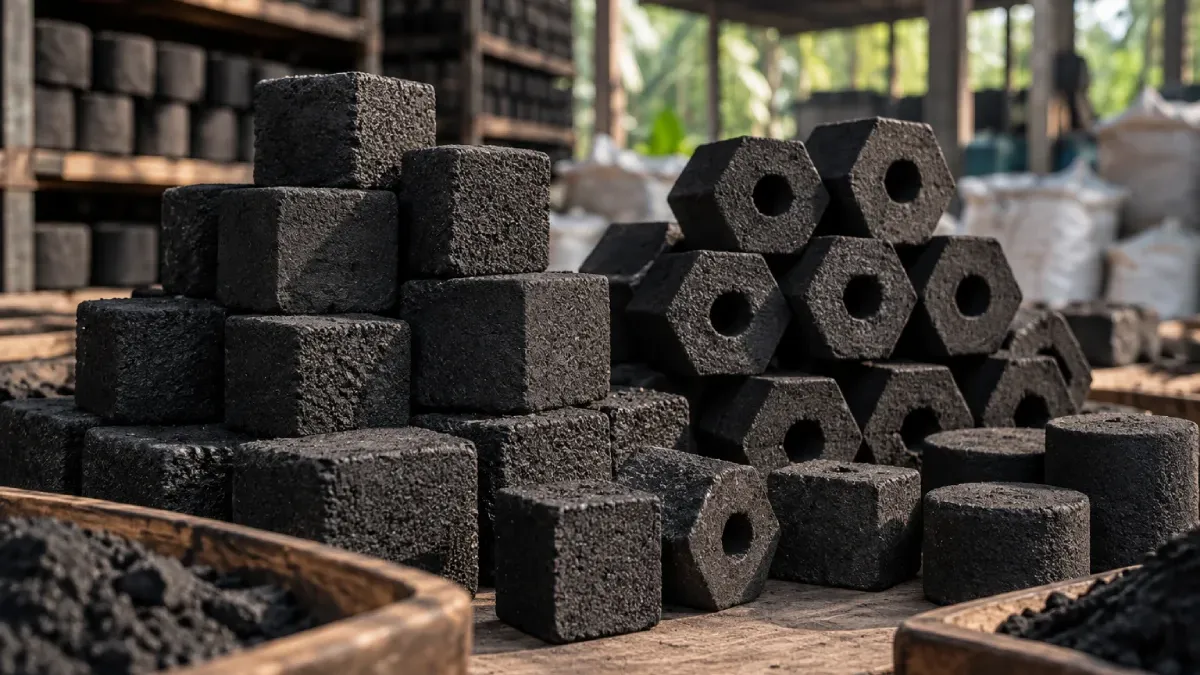
In the UAE market, cube-shaped charcoal is predominantly used, with standard sizes ranging from 22 to 27mm. While some market segments may utilize hexagonal shapes, cubes are the most commonly distributed. Be sure to confirm the exact dimensions that your downstream buyers expect before placing specifications with a supplier.
Shipping to UAE: What to Discuss with Your Supplier
Indonesia primarily exports shisha charcoal to the UAE via Jebel Ali Port in Dubai, which serves as the main entry point for containers heading to the broader UAE market and GCC redistribution. Most shipments are sent as FCL (full container load) for larger orders, while LCL (less than container load) options are available for smaller trial orders.
Before placing an order, there are several important points to discuss with a potential supplier:
Port of loading: It's essential to confirm which Indonesian port the supplier uses for shipping. Commonly, ports in Java are preferred, as many coconut charcoal production facilities are located there.
Packaging for ocean transit: Inquire about how master cartons are safeguarded inside the container. Moisture exposure during transit is a frequent cause of quality issues upon arrival in the UAE. A supplier with export experience should be able to provide a clear response to this concern.
Export documentation: To import into the UAE, you'll need a commercial invoice, packing list, bill of lading, and certificate of origin. Ensure that the supplier can supply all these documents in the format required by your clearing agent. If you have specific needs for the country of origin certificate, make sure to communicate this during the inquiry phase.
Lead time: Verify the production lead time from order confirmation to container loading, as well as the estimated shipping transit time to Jebel Ali. This information is crucial for your inventory planning, especially if your business experiences seasonal demand fluctuations.
Note: This guide does not include specific shipping timelines, freight costs, or UAE import duties, as these can change frequently. Always check current figures with your freight forwarder and clearing agent.
How to Request Samples Before Placing a Container Order
No reputable distributor in the UAE would place a container order for shisha charcoal without first assessing samples. This evaluation process is crucial for two main reasons: it ensures the product's quality and verifies that the supplier can meet your specific requirements.
When you reach out to an Indonesian supplier for samples, be clear about your needs:
- Specify the shape and size you want (for example, cube, 25mm).
- Indicate your desired ash content and fixed carbon levels.
- Request that the sample comes with a certificate of analysis for that particular batch.
- If you have specific packaging needs, mention them at this point.
Once you receive the samples, conduct tests that mimic real usage rather than relying solely on visual checks. Ignite the briquettes in a shisha setup and evaluate their heat consistency, ash behavior, whether they crack during use, and their performance throughout the entire burn.
If the samples meet your expectations, arrange a follow-up discussion regarding lead times, packaging, documentation, and order quantities before finalizing your first commercial order.
Establishing a Long-Term Supply Relationship
The distribution market in the UAE values consistency highly. If you can find an Indonesian supplier whose products meet your quality standards and whose operations are dependable, that relationship can hold significant long-term commercial value for both parties.
Suppliers that collaborate with established distributors in the UAE usually understand the necessary documentation, the significance of high-quality packaging, and the need for consistent batch specifications. This understanding helps to minimize issues over time.
When assessing if a supplier is suitable for a long-term partnership, consider the following:
- How clearly and specifically they address your initial technical inquiries
- If they can provide batch documentation instead of just a generic product description
- Their experience with shipping to the GCC and their grasp of the logistics involved
- How responsive their communication is during the inquiry and sample phases, as this can indicate their future behavior when challenges arise
A supplier relationship founded on clear specifications, verified documentation, and transparent communication regarding lead times and capabilities is far more valuable than opting for a slightly lower price per carton from a supplier who may cause operational difficulties.
Getting Started with Your Supplier Inquiry
When evaluating suppliers of Indonesian shisha charcoal for distribution in the UAE, a practical first step is to request product specifications and inquire about the sampling process.
At CocoCharcoal Universal, we offer shisha charcoal briquettes made entirely from selected coconut shell charcoal. Our specifications include a maximum ash content of 2.5%, fixed carbon content above 79%, and moisture levels around 5–6%, available in sizes ranging from 22mm to 27mm. We assist buyers throughout the inquiry process, from discussing initial specifications to coordinating samples.
Feel free to view our complete product specifications.
If you have particular requirements for UAE distribution, such as packaging format, documentation, or product specifications, we encourage you to reach out to our team directly.
Conclusion
The shisha charcoal market in the UAE adheres to high-quality standards, reflecting its role as a key distribution hub. Distributors here are not only catering to local demand but also supplying downstream buyers who have their own quality expectations. Supply chain issues can escalate quickly in this market.
Carefully evaluating an Indonesian supplier before placing your first order is not an act of excessive caution; it’s a strategy that experienced UAE importers use to safeguard their businesses. Make sure to verify specifications, test samples, confirm the documentation process, and assess the supplier's communication before making a commitment.
Choosing the right Indonesian supplier can lead to a reliable, long-term partnership for your distribution business. Getting this evaluation right from the beginning can save you significant time and costs down the line.
Are you ready to discuss your shisha charcoal needs for UAE distribution? Contact our team with your product specifications, and we will provide you with the relevant details for your inquiry.
Other Article
 Education
 Education
 Global Trading
 Education
 Tips & Tricks